
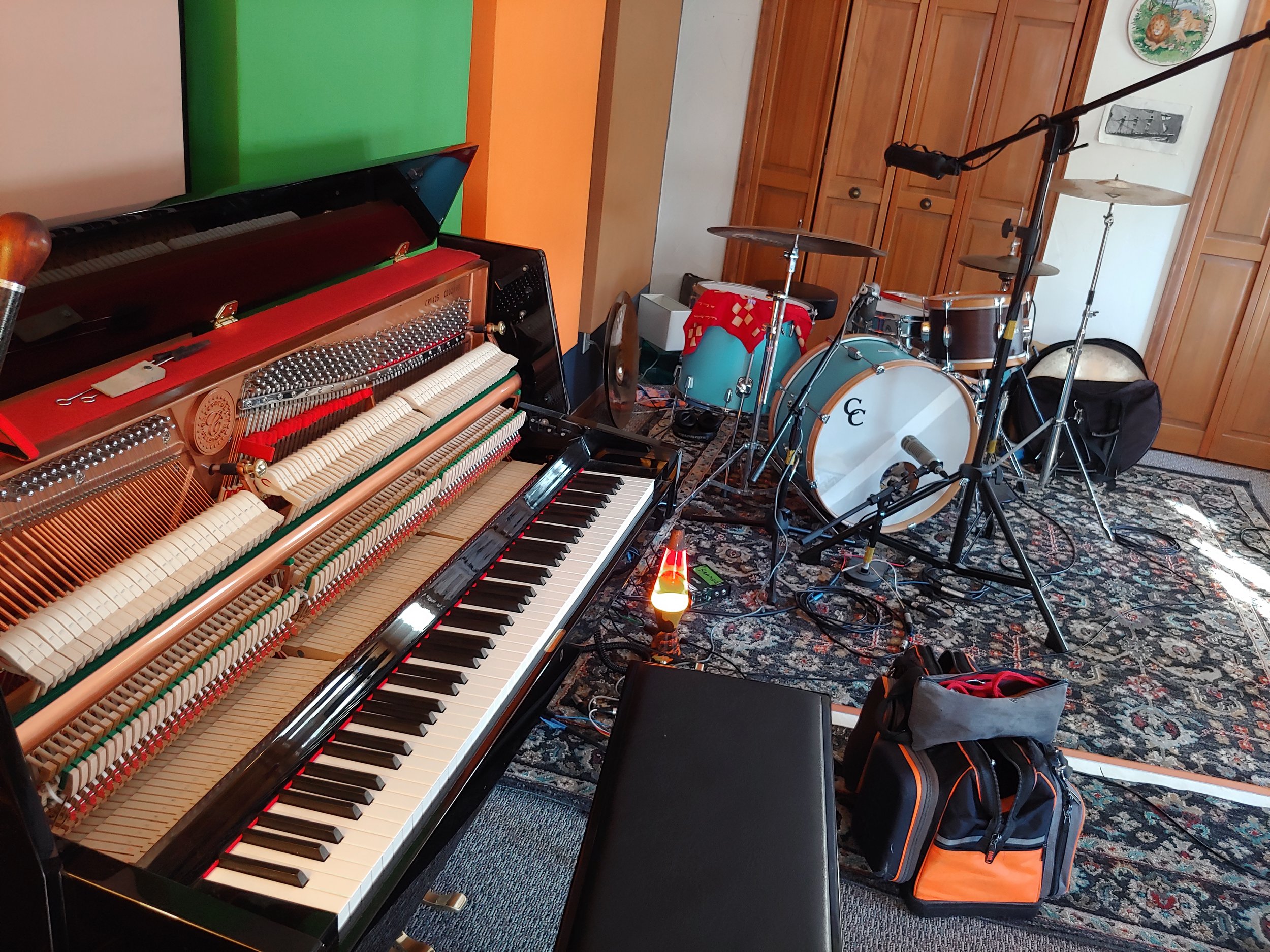

Piano Tuning & Maintenance FAQ
Whether your piano is used for family enjoyment, teaching, performance, recording, or worship, regular maintenance helps it sound better, play better, and last longer. Below are answers to some of the most common questions I receive from piano owners throughout the Denver metro area and Colorado Front Range.
Tuning & Service
How often should I have my piano tuned?
Most pianos should be tuned at least once or twice per year. Regular tuning helps maintain proper pitch, tone, and tuning stability. Pianos that are played frequently, used for teaching, performances, or recording sessions may benefit from more frequent service.
Why does my piano go out of tune?
Pianos are highly sensitive to changes in humidity and temperature. As the soundboard expands and contracts with seasonal weather changes, string tension changes as well. Colorado's dry climate and seasonal swings can make regular tuning especially important.
What is included in a tuning service?
A standard tuning includes a complete tuning of the piano to concert pitch (A440), an inspection of the instrument, and minor adjustments when appropriate. If I notice issues involving regulation, voicing, or repairs, I will discuss recommendations with you before performing any additional work.
How long does a tuning appointment take?
Most tuning appointments take approximately 2 hours. This allows enough time for a thorough tuning, evaluation of the piano's condition, and discussion of any maintenance concerns.
My piano hasn't been tuned in years. Will one tuning be enough?
Not always. If a piano has fallen significantly below pitch, it may require a pitch raise before a fine tuning can be completed. In some cases, a follow-up tuning is recommended after the strings have had time to stabilize.
What is a pitch raise?
When a piano has drifted substantially flat over time, bringing it directly to pitch can cause the strings to settle and drift again. A pitch raise involves a preliminary tuning to restore overall string tension, followed by a fine tuning to improve accuracy and stability.
When is the best time of year to tune a piano?
Any time is better than waiting too long, but many piano owners find it helpful to schedule tuning after major seasonal changes have settled. In Colorado, a tuning a few weeks after heating systems begin running in the fall and again after spring weather stabilizes can help maintain consistency.
Does moving a piano affect the tuning?
Yes. Even moving a piano across a room can affect tuning slightly. Moving a piano to a new home often exposes it to different temperature and humidity conditions, making a tuning advisable after the instrument has acclimated to its new environment.
Repairs & Maintenance
Do you offer repairs in addition to tuning?
Yes. I routinely address sticking keys, pedal issues, buzzing noises, action adjustments, broken strings, and many other common piano problems. If a piano requires extensive rebuilding or restoration work, I can recommend qualified specialists when appropriate.
What is regulation?
Regulation is the adjustment of the piano's action mechanism to maintain proper touch, responsiveness, repetition, and control. Over time, felt compresses and parts wear, causing the action to become uneven. Proper regulation helps restore consistency and playability.
How do I know if my piano needs regulation?
If your piano feels uneven, sluggish, difficult to control, or inconsistent from note to note, it may benefit from regulation. Many older pianos have never been fully regulated and can experience dramatic improvements in touch and performance after adjustment.
What is voicing?
Voicing is the process of adjusting the tone of the piano by modifying the shape and density of the hammer felt. Voicing can help reduce harshness, brighten a dull tone, or create greater consistency across the keyboard.
Can humidity damage my piano?
Yes. Excessive dryness or humidity can affect tuning stability and may eventually contribute to sticking keys, sluggish action parts, soundboard issues, and other mechanical problems. Maintaining a stable indoor environment is one of the best ways to protect your instrument.
Should I use a humidifier or climate-control system?
In Colorado's dry climate, many pianos benefit from maintaining stable indoor humidity levels. Room humidifiers, whole-house systems, or specialized piano climate-control systems can often improve tuning stability and help protect the instrument over time.
Scheduling & Pricing
How much does a piano tuning cost?
My standard tuning rate is $180. Additional services such as pitch raises, repairs, voicing, or regulation may involve additional charges, which will always be discussed beforehand.
How do I schedule an appointment?
Appointments can be scheduled online, by phone, or by email. If you're unsure what service your piano needs, feel free to reach out and I'll be happy to help.
Do you tune pianos for concerts, recitals, and recordings?
Absolutely. I provide tuning services for performances, recording sessions, recitals, churches, schools, and other professional applications where tuning accuracy and stability are especially important.
Do you offer same-day or emergency service?
When scheduling permits, I can often accommodate urgent requests for performances, recordings, auditions, and special events.
Service Area
What areas do you serve?
I provide piano tuning and maintenance services throughout the Denver metro area and surrounding Front Range communities, including:
Denver
Littleton
Lakewood
Golden
Evergreen
Arvada
Westminster
Broomfield
Boulder
Parker
Castle Rock
Brighton
Commerce City
Thornton
Northglenn
Englewood
Highlands Ranch
Morrison
If you're unsure whether you're within my service area, feel free to contact me.
Schools, Churches & Organizations
Do you service churches and worship spaces?
Yes. I regularly work with churches and worship organizations to maintain pianos used for services, rehearsals, concerts, and special events.
Do you work with schools and universities?
Yes. I provide tuning and maintenance services for schools, colleges, universities, music programs, and teaching studios. I can also help develop ongoing maintenance schedules for institutions with multiple instruments.
Can you maintain multiple pianos at one location?
Absolutely. Schools, churches, recording studios, performance venues, and community organizations often have several pianos that require ongoing service. I offer flexible scheduling and maintenance plans tailored to each location's needs.
About My Services
What types of clients do you work with?
I work with a wide range of clients throughout Colorado, including private piano owners, music teachers, professional performers, churches, schools, recording studios, and performance venues.
How much experience do you have?
I have been tuning and servicing pianos professionally since 2012 and work with instruments ranging from family uprights to performance and institutional pianos throughout the Denver metro area and Front Range.
Still Have Questions?
Feel free to contact me if you have questions about your piano or would like to schedule service. I'm always happy to discuss your instrument's needs and help you develop a maintenance plan that keeps it performing at its best.